
Sensory Alignment on the Firing Line: The Tactile Biofeedback Breakthrough – US9,982,963B2
For centuries, firearm innovation has revolved around mechanical velocity, optical precision, and the optimization of chemical propellants. From the rudimentary matchlocks of the past to sophisticated modern platforms, the focus remained squarely on the weapon’s mechanics and engineering tolerances. Yet, every veteran marksman knows that a firearm is only as accurate as the human interface controlling it. While modern firearms feature forgiving ergonomics, customizable triggers, and specialized grip textures, they do very little to fundamentally correct the human errors associated with subtle hand shifts, rotational twisting, and poor spatial awareness. The physical connection between the operator’s skin and the frame remained an unexploited variable in shooting accuracy.
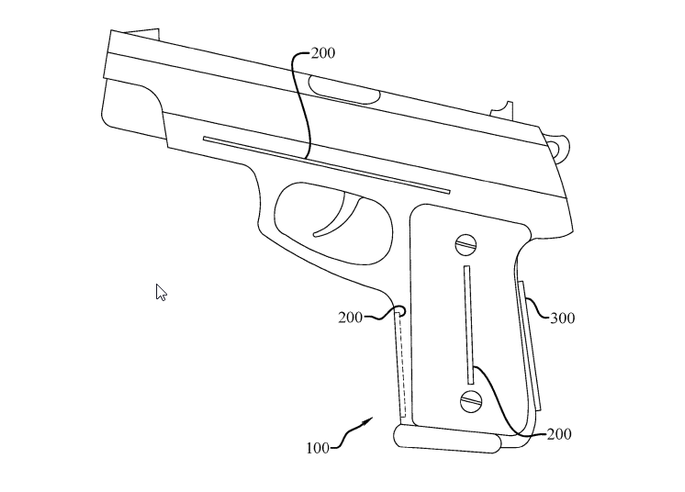
On May 29, 2018, a profound shift in firearm design occurred when U.S. patent US9,982,963 was granted to inventor Lanny L. Johnson for a firearm incorporating a tactile biofeedback reference feature. This innovative design introduced a geometric reference structure strategically integrated into the exterior body of a weapon. Instead of relying on aggressive, non-specific checkering or visual alignment markers that can distract a shooter from their sight picture, the patent introduced a precise longitudinal feature engineered specifically to harness a shooter’s innate neuromuscular memory, sensibility, and proprioception.

The mechanism relies on precise physical geometry rather than digital components. At the core of the invention is a tactile reference attachment or integrated feature featuring an elongated indentation or projection. For instance, on handgun platforms, a flexible, highly durable substrate with a durometer value exceeding 60 Shore A is applied directly to the grip or frame. This reference channel is meticulously engineered with a precise width between 2.0 and 5.0 millimeters—a dimension tailored exactly to mirror the natural threshold of human two-point discrimination on the finger pads and palms. When a shooter grips the weapon, the distinct, sharp edges of this longitudinal feature form a subtle dermal imprint on the skin. This provides a microdermal psychomotor “read” that immediately registers whether the hand is perfectly aligned with the barrel axis, completely eliminating unconscious rotational drift and yaw errors before a shot is ever fired.

The US9,982,963 patent has paved the way for an entirely new paradigm in ergonomic weapon design. Since its debut, the principles of tactile biofeedback have expanded rapidly across the tactical industry. Modern implementations now include dual-sided reference structures for ambidextrous handling, specialized thermal-resistant compounds that maintain sharp edge definitions under rapid-fire conditions, and integrated reference points along the trigger shoe and forestock. By treating the shooter’s nervous system as an extension of the platform’s sighting system, this technology ensures unparalleled consistency from the first draw to the final trigger break.


